Pumpkin roll

“Pumpkiny goodness.”

(That’s what Boyfriend came up with when I said I didn’t know how to introduce this post.)

This recipe comes from Nestlé’s Chocolate 3 Books In 1 which is available from Amazon.com.

Time required: 2.5 hours

Yields: 10 slices

Cost per slice: $4.43

Total cost if you have none of the ingredients: $44.34

Special kitchen implements I used:

  • baking pan: 15″ x 10″
  • sifter
  • wax paper and plastic wrap

Roll ingredients:

  • ¾ C flour
  • ½ TSP baking powder
  • ½ TSP baking soda
  • ½ TSP ground cinnamon
  • ½ TSP ground cloves
  • ¼ TSP salt
  • 3 eggs, room temp
  • 1 C white sugar
  • ⅔ C pure pumpkin

Frosting ingredients:

  • 8 oz block of cream cheese, room temp
  • 1 C icing sugar, sifted
  • 6 TBSP butter, room temp
  • 1 TSP vanilla extract

Instructions:

1. Pre-heat oven to 190.5°C / 375°F.  Prepare baking pan by greasing it, then line with wax paper, then grease and flour the paper. Then place a large piece of wax paper down on a flat surface and dust it with icing sugar for later.

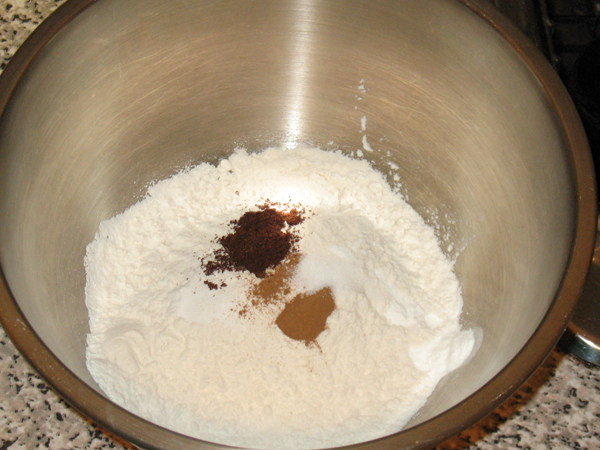
2. Combine: flour, baking powder, baking soda, cinnamon, cloves, and salt.

3. In a mixer, beat eggs and sugar until it thickens.  Add pumpkin.

4. Stir flour mixture into wet, adding about one third at a time.

5. Pour into prepared pan and spread evenly.  Bake 13 min, when it’s done if you press lightly on the top with a spoon it should bounce back up.

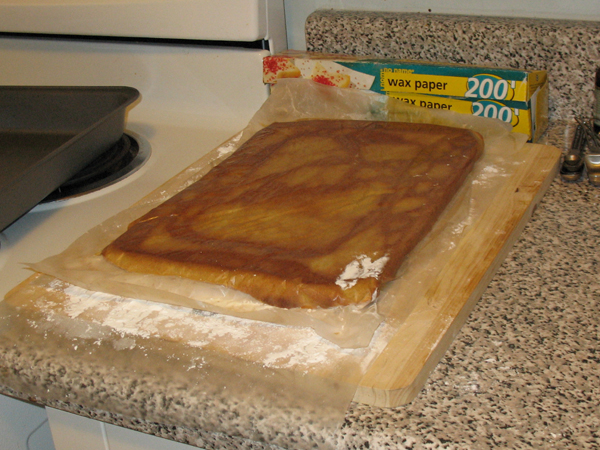
6. Invert pan onto flat piece of wax paper.  Carefully peel the paper off the back (the bottom) of the cake.

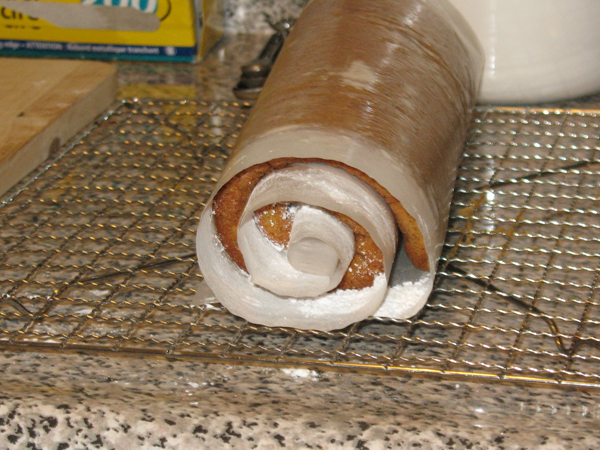
7. Start at the end closest to you, and using the piece of wax paper on the bottom, gently roll the cake up onto itself, and place on wire rack to cool.

8. Meanwhile, make frosting by combining all ingredients in mixer and beat til smooth.

9. Unroll the cake, and remove the wax paper.  Spread frosting across it, and roll back up. Good luck with this part.

10. Cover in plastic wrap and chill for at least one hour.

To prevent roll from spreading out, creatively ram it into a pan and put other items in the pan to hold it against the side.

11. Slice and serve!

Verdict:

“I don’t know how to classify this post.”

“How about delicious?”

“You liked it that much eh?”

This turned out really well. I’d recommend less frosting, the amount you get from the recipe is really too much, it was oozing everywhere.  A thin layer of frosting would be fine.

Playlist: enjoying the silence!

Candy cane crème brûlée

My affection for custard is well-documented. I made this on Sunday, for no particular reason aside from the fact that I just wanted some. It’s still winter (faux-spring if you live in Toronto) which means it is still candy cane season and adding crushed candy canes to my crème brûlée seemed like a good idea.

Good to know before you start:

If this is your first time making crème brûlée, fear not! I have covered this before. Read my earlier posts about my first time making it, and my pumpkin flavoured variety to see the technique in action. You’ll need to make a water bath, and a kitchen torch.

Time required: 2 days

Yields: 6 portions

Cost per serving: $4.59

Total cost if you have none of the ingredients: $27.59

Special kitchen implements I used:

  • mesh strainer
  • 6 ramequins
  • baking pan: 9″ x 13″
  • a dish towel you don’t mind getting wet
  • fire-proof surface (ie: marble slab or glass cutting board)
  • awesome kitchen torch™

Ingredients:

  • 2C heavy cream, room temperature
  • 5 egg yolks, room temperature
  • ⅓ C granulated white sugar
  • half of one vanilla bean, split & scraped
  • ⅛ TSP fine sea salt  (normally I use table salt but I was out)
  • ⅛ TSP ground cinnamon
  • 1-2 TSP demerara sugar per portion (do not add until serving)
  • 1 crushed candy cane

Instructions:

1. Pre-heat oven to 325°F / 162°C, using centre rack.  Fill kettle with water and simmer for later.

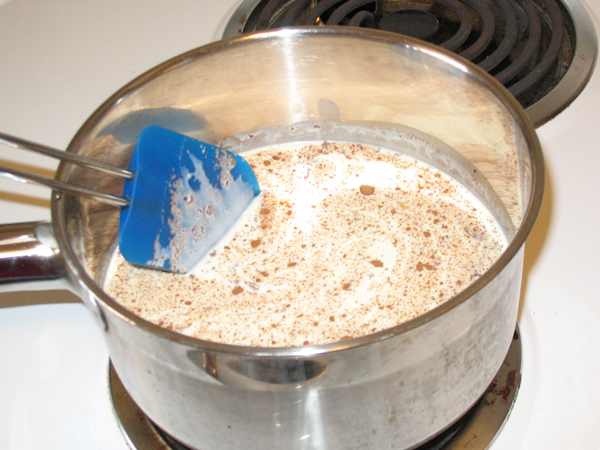
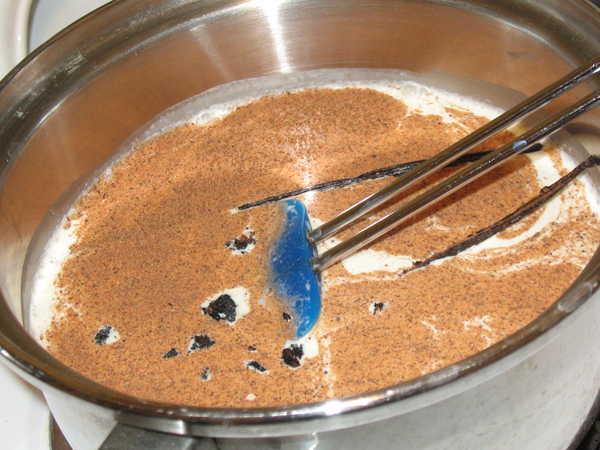
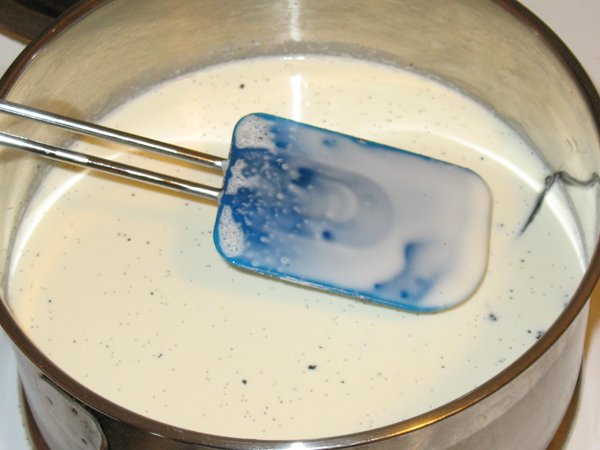
2. In a heavy-bottomed sauce pan, add cream, cinnamon, and vanilla bean (pods and shell). Heat on LOW until scalded then remove from heat.  When scalded, the bubbles have just started to form and break the surface.  (It’s normal for a skim to form.)

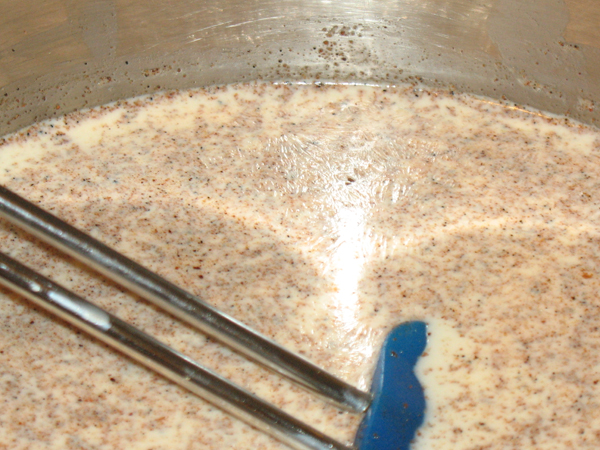
splitting like mad!!

Watched pots never boil and all, but the instant you turn your back it’ll burn. Not that I burn anything, by the way. Just observing.

3. In a medium bowl, mix sugar and salt together.

4. Separate the yolks from the egg whites, and gently whisk yolks into sugar mixture until just combined.

5. Pour the hot cream through a strainer as you temper it into the egg mixture; add about a third of the cream, gently stirring between each pour. (Doing this slowly prevents the egg from scrambling.)

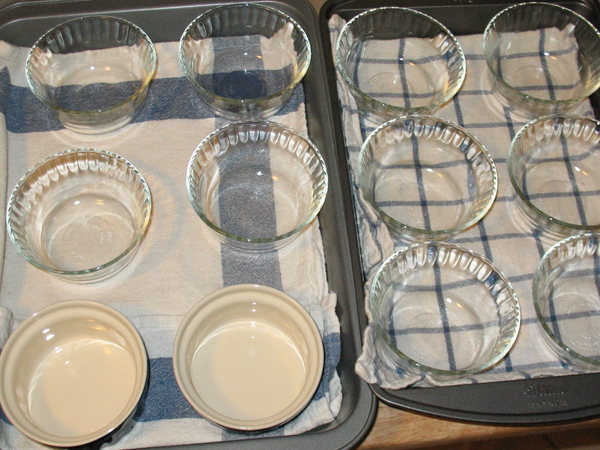
6. To prepare for the water bath, fold a dish towel until it sits evenly in the bottom of a 9″x13″ pan, and place your ramequins atop the towel. This will prevent the cups from slipping.

7. Use a spoon to scrape the bottom of bowl, where all the vanilla bean has sunk, and make sure each ramequin has a fair amount of the bean; then pour the liquid into the ramequins.

8. Place pan in oven, and create your water bath by carefully filling the pan with hot water from the kettle, until the water reaches at least halfway up the sides of the ramequins.

9. Bake for 35-40 minutes until the edges of the custard are set. Test for doneness by shaking, the centre should wobble like Jell-o. If the whole surface shakes give it 3-5 more minutes. If nothing shakes it’s overdone.

10. Remove from oven, and carefully remove ramequins from pan. Set them on a rack to cool for at least one hour.

11. Cover each ramequin with plastic wrap, and chill overnight.

12. Remove from fridge 30 minutes before you want to eat them.  After 20 minutes, remove the plastic wrap, and use a folded piece of paper towel to gently blot the surface to remove any condesation.

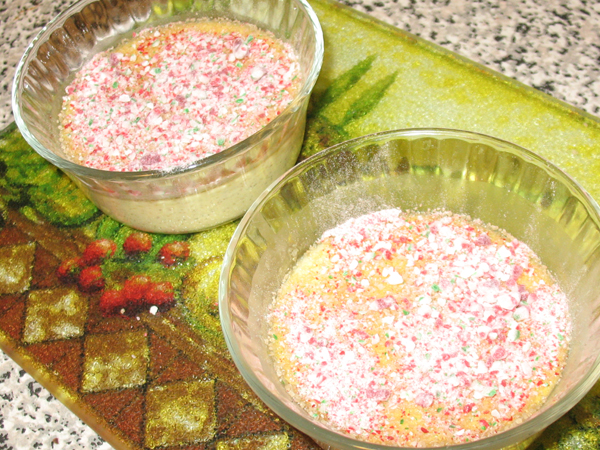
13. Add the topping, sprinkling the demerara sugar on top, tilting and tapping each ramequin to cover the entire surface, and then repeat with the crushed candy cane.

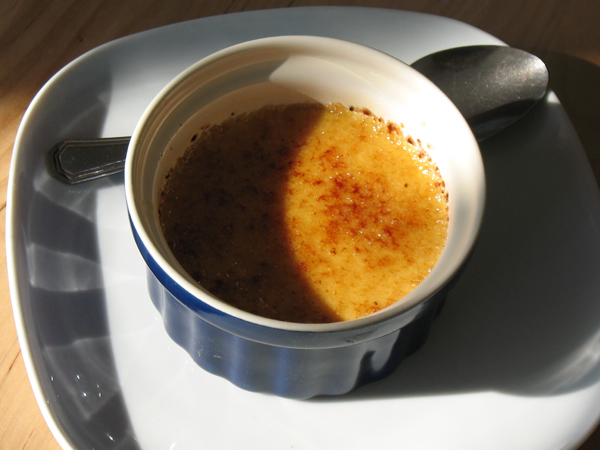
14. Place the ramequin on a fireproof surface  and torch that sucker, using a low flame held 1-2 inches from the surface. Start in the middle and slowly go in clockwise circle to the edges. Oooh, pretty!

15. Return to fridge for 10 minutes, then eat.

Verdict: Father forgive me. It had been 90 days since my last crème brûlée and I was helpless to resist the siren song of the heavy cream in the fridge. I succumbed.

Christ, I’m glad I did. I love this stuff. It’s delicious.

This was good. Objectively speaking, you couldn’t really taste the candy canes. Boyfriend says he couldn’t taste them at all, but I distinctly remember tasting candy cane in two bites. (The cane I used was from last year, maybe it went stale?)

I had planned to add a drop of peppermint oil but decided against it, not wanting to overwhelm the cinnamon, which had a gentle hint of flavour.

Heavy cream and vanilla beans are expensive, but if you wait until the cream goes on sale and get the beans in bulk, making crème brûlée does not cost you much. Buying it in a restaurant can start at $8.00 for one tiny bowl, so when you think about it, making it at home is the fiscally responsible thing to do. Canadians are in record levels of debt, so… you’re welcome!

Playlist: Barenaked Ladies – Call and Answer

Christmas chocolate boxes

This year Boyfriend and I made boxes of chocolate as Christmas presents, to go along with the tins of peppermint bark. This idea had been percolating for a few months. After the first batch of chocolates turned out so well, I asked Boyfriend if he wanted join me in making chocolates together. He thought this was a good plan, so we spent a few evenings drinking cocoa and playing video games as we worked out the details.

There were three problems with this plan:

  1. How do you make fillings for chocolates that won’t spoil? Mousse was out.
  2. How do you make coloured fillings when somebody has an anaphylaxis reaction to food colouring?
  3. Would the chocolates survive being transported from Toronto to the east coast on the VIA train?

First, we did some stealth research on family preferences, and started brainstorming what flavours to make, and how to make them. Neither of us had made chocolate fillings before, but how hard could it be? We decided that Boyfriend would make the fillings and I would temper the chocolate, and by the magic of team work, they would come together into one glorious confection. Oh, hubris.

Second, we ordered supplies: silicon moulds, flavouring oils, boxes, ribbon, and photo-quality paper. After coming up with a rough estimate of how much chocolate was required, I hit up the farmer’s market and purchased seven kilograms of Belgian chocolate; milk, dark, semi-sweet, and white.

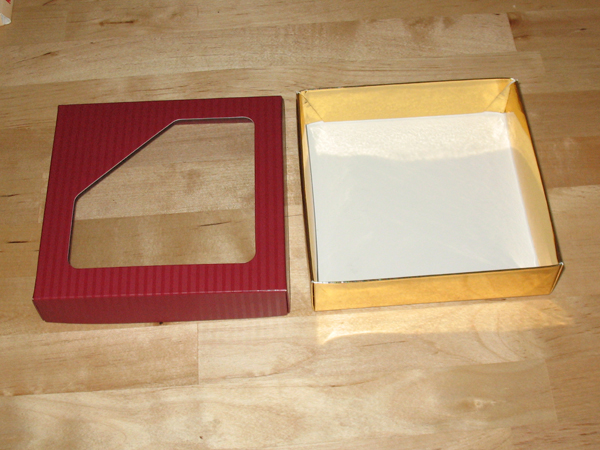
Third, after the boxes arrived, they had to be assembled. This was a lot harder than it sounds. Boyfriend saved the day since I had no idea what to do. Once the boxes were ready, I designed a label and he affixed it to the box.

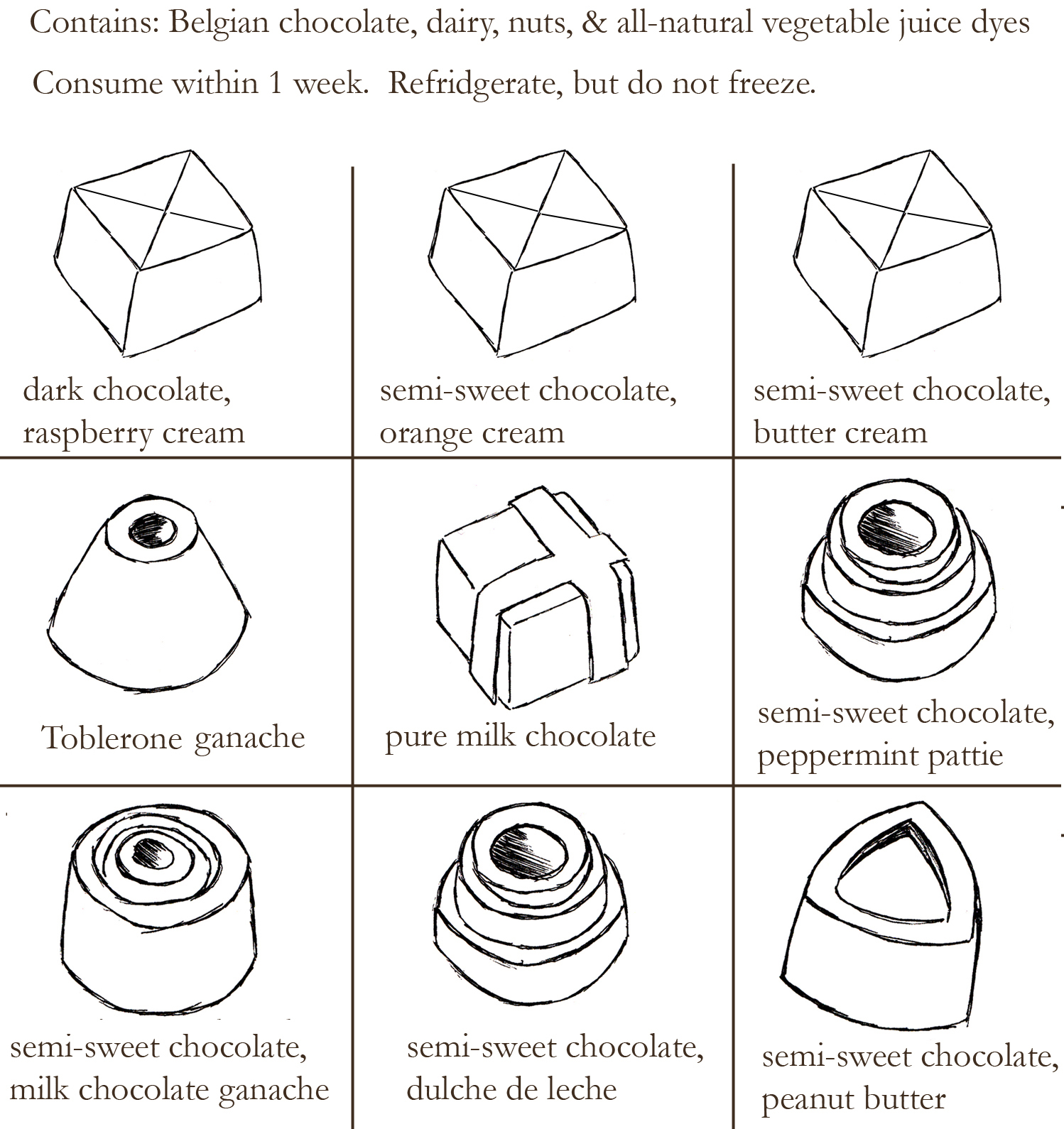
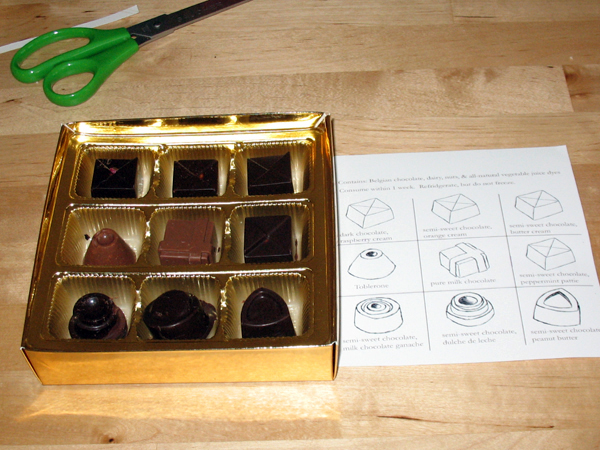
Fourth, we made a map! We had 6 different mould shapes, but each box was meant to hold 9 chocolates, so there would be some repeats. The map went under multiple revisions before I settled on this:

Fifth, practice run! Filling chocolates was brand-new territory, I wanted to experiment to get the technique down. I tempered a batch of chocolate and we got to work.

To make the fillings, Boyfriend mixed up icing sugar, butter, and evaporated milk in Nemo the KitchenAid, and then divided into 4 bowls, which he flavoured accordingly with: orange cream, peppermint, and raspberry. To get the buttercream, he kept one bowl aside without any extra flavouring ingredients.

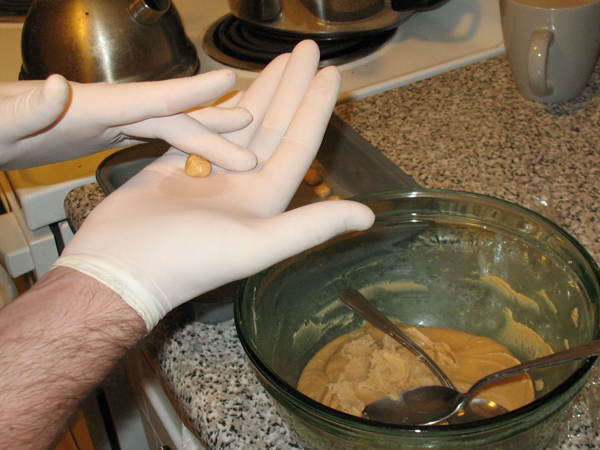
The peanut butter filling was chilled, rolled into balls, then placed in the freezer.

Boyfriend making peanut butter balls

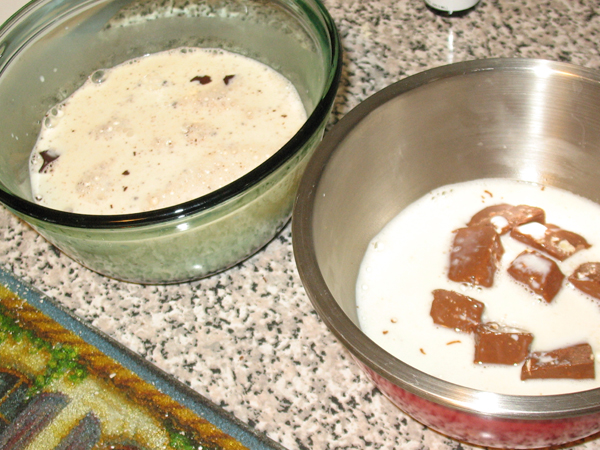
For the other filled ones, I made a simple ganache, by pouring scalded cream over milk chocolate, and over Toblerone pieces.

Once the chocolate was tempered, I poured a little chocolate into the bottom of the moulds, he put the filling in, and I topped it up with more chocolate. We shook the moulds to settle the chocolate, and back into the fridge.

After the test chocolates set, we put half in the fridge, and left the rest on the counter, to see how they held up at room temperature. After a week the chilled ones were fine, the others has degraded a bit, so that was good to know.

What about dying the fillings? Peppermint patties are white anyway, but how can you make pink, orange, and yellow, without using food colouring? We added a dash of pure beet juice to the raspberry which worked like a charm, soft pink was achieved. (Experiments with other vegetable juices to colour the orange and butter cream failed.)

Six, it was time to make the first batch of real chocolates. Armed with what we learned from the test trial, we made a batch of chocolates for Boyfriend’s family. Everything turned out wonderfully, aside from the Toblerone ganache which collapsed.  However, it was the tastiest one.

After spending the weekend with his family, we came home and went to work on round 2 for my family – which would be shipped on the VIA train. Back to the drawing board on the Toblerones, and decided to skip the ganache this time, and just melt and mould solid Tolberone, which held up much better.

The brown triangle in the top left corner is the label, which I have blurred out, but it says the name of our chocolate company, so to speak.

Verdict:

Collaborating with Boyfriend was a lot of fun. Aside from the tears and the tantrum at the train station (which is a long boring story), I had a great time! His family really enjoyed the chocolates, and hopefully my family likes them too. ^^

The lovely ribbon I was so excited about? Completely forgot to use it until today. The map was a little bit off. We had planned to use the tiered square for 3 flavours, but ended up with 4 in that shape, and the milk chocolate ganache and the dulce de leche were reversed. Oops.

I think my idea for Toblerone ganache is still a sound premise, but I’m going to have to keep tinkering. Placing the ganache fillings into the chocolate was really tricky, the fillings oozed out a bit, I’m not sure if adding more liquid to the ganache would help or not.

For next year, I’ll make sure I have at least 2 copies of each mould so we can make 30 per flavour at a time. I’ll also start a few days earlier, got a bit distracted and left some things to the last minute.

Where to get supplies:

Both online orders arrived promptly, and had been packed with care. I’ll order from both companies again.

Eggnog

For reasons I cannot fathom, Boyfriend loves eggnog. I do not, and when someone offers me a glass of eggnog, I have terrible flashbacks to a night involving a childhood illness and my father’s questionable decision that eggnog was what the doctor ordered. Ugh. To this day the thought of drinking eggnog makes me queasy.

A few days ago Boyfriend bought some eggnog, but he drank it all and has been moping around.

“Sigh.”

“Why are you sighing?”

“We’re out of eggnog.”

“You mean you’re out of eggnog.”

In a burst of Christmas generosity I was moved to make homemade eggnog for him. I googled around until I found something that looked promising. I made a few changes to the recipe.

Time required: 1 hour

Yields: 3-4 large glasses

Cost per glass: $4.00

Total cost if you have none of the ingredients: $25.00

Special kitchen implements I used:

  • Nemo the KitchenAid

Ingredients:

  • 2 C milk
  • 1 C heavy cream
  • 1 vanilla bean, split and scraped
  • 1 TSP nutmeg
  • 4 egg yolks, 4 egg whites
  • ⅓ C sugar + 1 TBSP

Instructions:

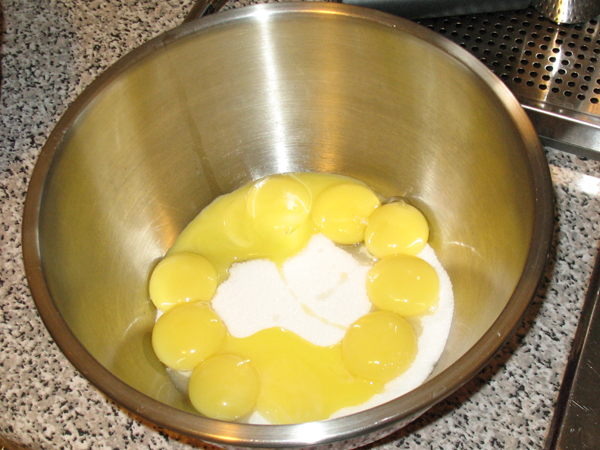
1. Separate yolks and whites. Place yolks in mixing bowl, set whites aside for later.


2. Beat yolks until colour lightens.

3. Gradually add ⅓ C of sugar to the yolks, beat until thoroughly dissolved.

4. In a sauce pan, add milk, cream, nutmeg, and vanilla bean. Scald mixture, then remove from heat.

5. Strain and temper hot cream into yolks, adding about one third at a time.

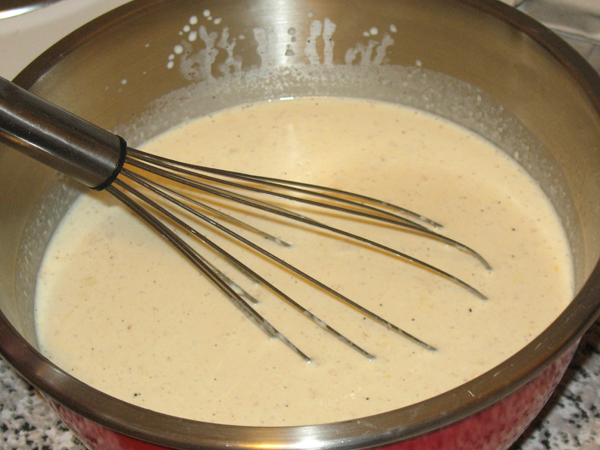
Once the cream and yolks have been mixed, return to sauce pot and heat to 160°F / 71.1°C. (I switched to a fresh pot for this.)

Don’t forget to stir. I forgot to stir, and I got a scrambled eggs on the bottom. Oops.

6. Remove from heat, transfer to mixing bowl, and chill.

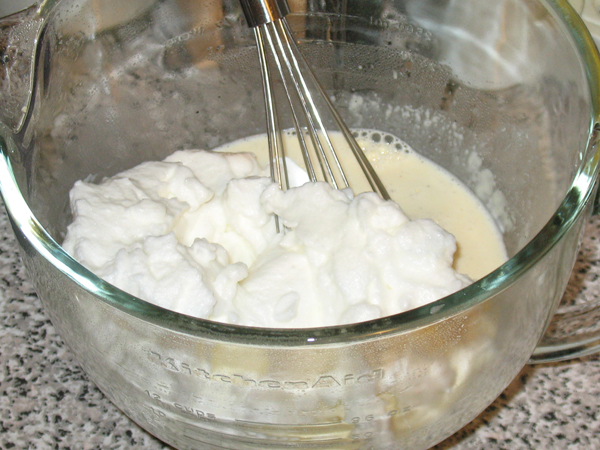
7. Meanwhile, in another mixing bowl, beat the egg whites to soft peaks. (I used the 3rd setting for 2-3 min.)

8. Add 1 TBSP of sugar to whites, beating until stiff peaks form. (Took 2-3 min on 4th setting.)

9. Whisk whites into chilled mixture.

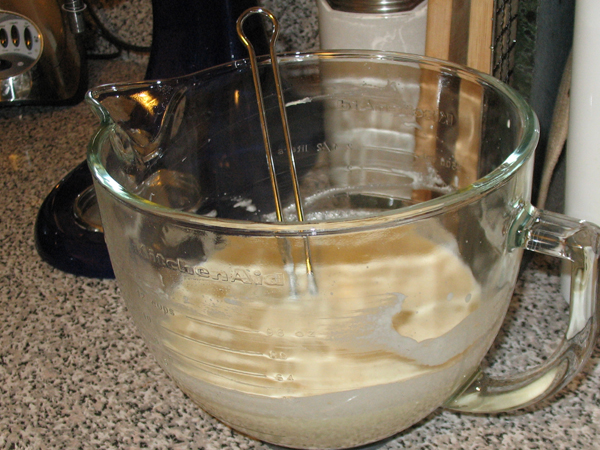
Whisking got boring so I used the wire-whip attachment in the mixer to do this for me.

10. Chill and… drink I guess.

Verdict:

Boyfriend assures me it was delicious. I’ll have to trust his judgement, I have no intentions of drinking that swill. After he drained the glass I confessed that I didn’t stir it enough and found eggy mixture in the bottom.

“Oh. I thought I felt something kinda solid in there.”

“But it was okay, yeah?”

“Yeah. It was really good, despite the eggs. Best homemade nog I’ve ever had!”

“I’ll take your word on that.”

Playlist: The Vision of Escaflowne OST

Patty’s peppermint bark

I’ve been making peppermint bark for a few years. It’s my Christmas specialty. I’ve experimented with different brands of chocolate, candy canes, and peppermint extract vs. peppermint oil, and when I make my annual trip to buy mass quantities of Belgian chocolate, inevitably the shop keeper and other patrons ask me what I’m making. This sparks interesting discussions in the line-up about the best way to achieve a perfect bark, like so:

I send it to my family and Boyfriend’s family. This year, I wanted to make bark, plus a surprise that Boyfriend and I collaborated on. The surprise will not be unveiled for a few days, but I’ll teach you how to make bark today.

One popular bark flavour is using all-white chocolate with red canes, but I prefer a bark that is 2 parts white chocolate to 1 part semi-sweet, using the traditional red, green, and white candy canes per batch.

Good to know before you start:

The chocolate must be tempered, so review my how-to guide before trying this.

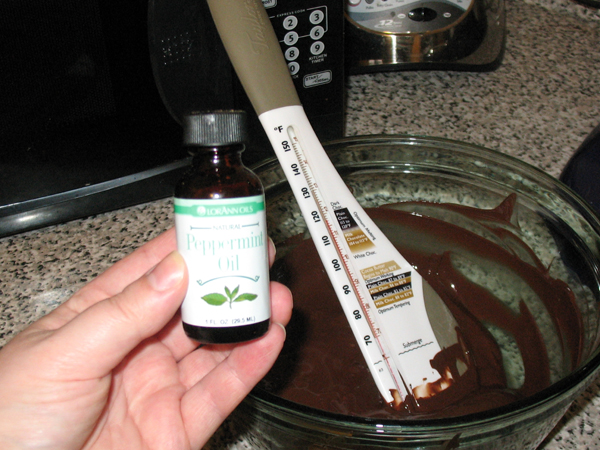
Buying candy canes after Christmas is an exercise in futility, lots of places sell out. I buy the canes in Nov, and pick up the Callebaut chocolate in Dec. Whether or not to use peppermint extract or peppermint oil depends on your taste preference, I prefer the oil which I order online from Golda’s Kitchen.

Working with chocolate, you must make sure EVERY dish and implement is completely dry. A drop of water will cause the chocolate to seize.

Wear latex gloves while handling chocolate to prevent the natural oils in your skin from blemishing it. The heat of your hands will also melt it, wearing gloves helps reduce the heat a bit.

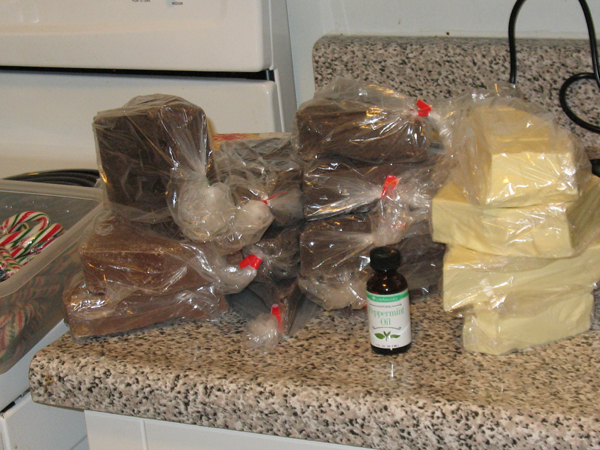
this is a lot of chocolate

(By the way, that picture is all the chocolate I purchased this year, not just the portion I used for my bark. I just like looking at all of it together.)

Time required: 5 hours

Yields: enough for 7 households

Total cost: depends on the quality of chocolate, and since it’s a gift I’m not going to say

Special kitchen implements I used:

  • chocolate thermometer
  • 2 cookie trays: 18″ x 12″ and 14″ x 10″
  • wax paper
  • hammer
  • large freezer bag
  • gloves/tongs

Ingredients:

  • 8 oz semi-sweet chocolate
  • 16 oz white chocolate
  • a few drops of peppermint oil (I use LorAnn oils)
  • 6 jumbo Allan peppermint candy canes

Instructions:

1. Line baking trays with wax paper.

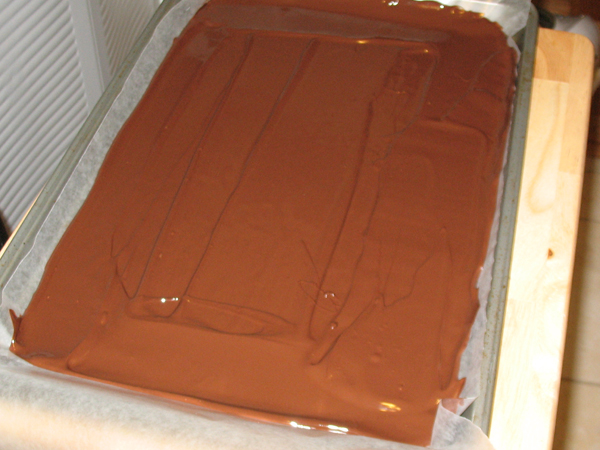
2. Use a serrated blade to chop the semi-sweet chocolate. Weigh out 8 oz, and divide it between two bowls: two thirds in one, one third in the other. Temper the chocolate and stir in one drop of peppermint oil.

3. Pour the chocolate into the trays, spreading evenly with a spatula. Chill in fridge for at least 10 minutes.

Take a break to wash and dry your bowls and chocolate thermometer, they must be bone dry.

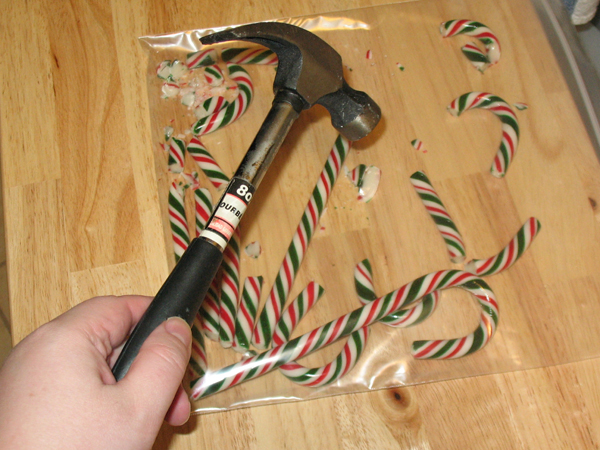
4. Unwrap the candy canes, place into freezer bag, and HULK SMASH!! Hammer away until you’ve got a bag of itty-bitty pieces, and set them aside.

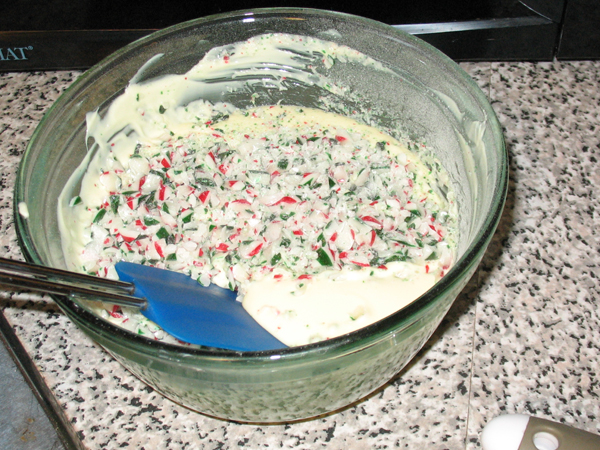
5. Chop the white chocolate, and temper it too! Stir in 2-3 drops of peppermint oil.

6. Stir crushed canes into white chocolate.

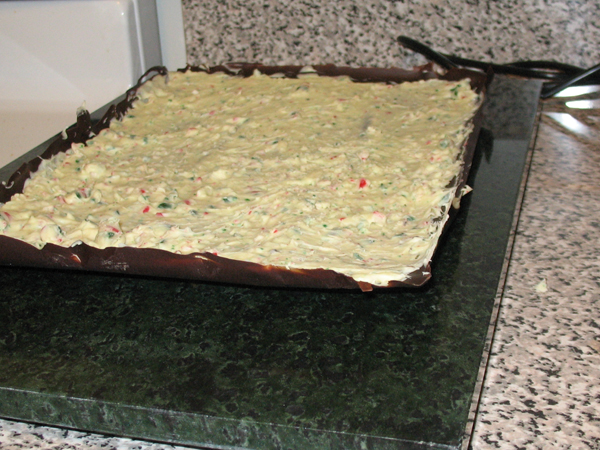
7. Immediately pour onto first layer and spread evenly with spatula.

Let the trays sit on the counter for 15 min, this gives the white chocolate time to bond to the semi-sweet. Once I forgot to do that, and the white never really adhered to the bottom layer. :[

8. Chill in fridge for at least 3 hours.

9. When you are ready to cut it into pieces, remove the wax paper from the bottom and let it sit on the cutting board for 10 minutes. Use a heavy blade to cut into strips.

10.  Place into tins, separate each layer with a piece of waxed paper.

11. Keep in the fridge. Allow the pieces to sit at room temp for 10 minutes before eating.

12. See all that bark dust on the cutting board? Save it as a garnish for hot chocolate with steamed milk, or pancakes!!

Verdict: When I started out making bark, I used to make it with equal parts of each chocolate. My sister Chocoholic suggested decreasing the semi-sweet. I followed her advice and was really pleased with the result. Bark has a strong flavour so a thin piece is fine, using the 2:1 ratio results in perfect, delicious bark. Merry Christmas!

Playlist: Type O Negative – Hey Pete

On chocolate making

I had an wonderful thought on making chocolates the last time I was at the grocery store.

“Look,” I said to Boyfriend, “they are selling giant Toblerone bars for $8.00 over there!”

“Nevermind that!” he said, and valiantly tried to steer me away.

“Think about it: Toblerone ganache.”

“What’s that?”

“You make ganache by pouring scalded cream onto chopped chocolate, then let it set.  I want to buy that bar and make a Toblerone ganache, and use it as a filling for a new chocolate I’m going to make!!”

“Hmmm…”

That was the critical moment. I knew I had won.

But alas, no chocolatiering for me today, I am very sick and it’s going to be a few days before I am fit for baking. However, December is here which means: very soon I will soon be making my Christmas specialty. While I am recuperating, I’m interesting in hearing your thoughts on chocolate.


Chocolate truffles

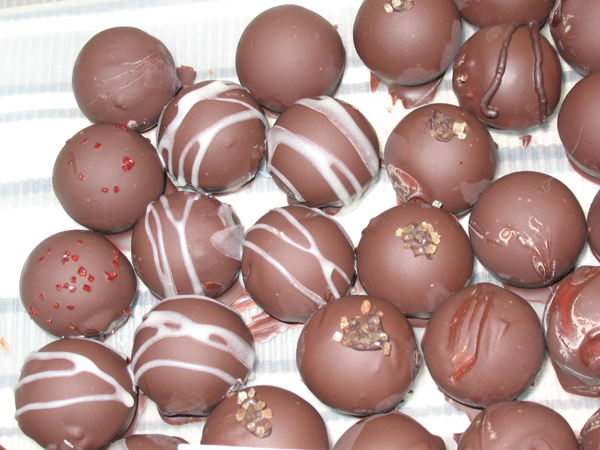
Yesterday Hobby Victim invited me and Boyfriend over for a day of food, video games, and chocolate making. She had a godly supply of fine chocolate, truffle shells, and liquor. I arrived with a bag of equipment and flavouring oils. We quickly got started:

You can make truffles by rolling them by hand – which is difficult –  or by using truffle shells.  A truffle shell is a hollow chocolate sphere, with a hole in the top, which you can pipe a filling into.  It yields a more even and professional look.

Each truffle consists of a filling of rich dark chocolate ganache, a shell of white or dark chocolate, a coating of milk chocolate, and a lovely garnish. We made 4 flavours:

  • Triple Sec and orange cream
  • Baileys Irish cream
  • Peppermint
  • Crème de Cassis (black currant) and raspberry

To prepare the ganache for the fillings, Hobby Victim scalded the cream while I chopped the chocolate. She tempered the hot cream into the chocolate and whisked it up.

We divided the ganache into 4 bowls, and added the liquor and essential oils to taste.

An essential oil is a pure concentrated oil, whereas flavour extracts are a mixture of oil and alcohol. The oils are about 4 times stronger than extracts, yielding a much more intense flavour. You can find these oils in specialty shops or online.

The fillings were cooled in the fridge for awhile, then transferred into piping bags, and the ganache was squirted into the open hole in the top of the shells.  Back into the fridge for awhile to set.

We made second batch of ganache to use as a final coating.  Each truffle was dipped in the bowl and transferred to a cookie sheet, where various decorations were added while the coating was still soft, so when it hardened it would look like so:

peppermint truffles with candy canes

Aren’t they lovely? They remind me of little ornaments.

truffles with sprinkles, white chocolate, and sugar

I’m pleased to report they all tasted delicious.

truffles, truffles every where!

These took awhile to make, but I had a great time. Baileys shots makes any lengthy task worth doing. I will definitely make these again, and when I do, I’ll post some how-to pictures for you.

What type of chocolates do you want to see next?

Patty’s pumpkin crème brûlée

Yes. I’m afraid it’s true. I have dangerous news: it is possible to make crème brûlée even more glorious.

I’ll be frank, I am tired of the trials and tribulations of fudge.  I needed a day of distance. Today is Thanksgiving, and Boyfriend and I are heading to Hobby Victim’s house for dinner. We each made a dessert. Mine was my favourite custard, tweaked with an inspiration from The Globe and Mail. I took my existing recipe, and tinkered with the proportions for the spices, and used real vanilla bean.

Toronto look out: something delicious this way comes!

Good to know before you start:

As I mentioned previously, custard should be made the day before because it needs to chill overnight. Before you serve it, remove from the fridge for 20 minutes, then caramelize the sugar, then chill for another 10 minutes before eating – we want cold custard and glassy sugar, not hot.

To achieve the silky texture that crème brûlée is famous for, it is imperative to use a mesh strainer. Double-straining into ramequins in a pain in the ass but so worth it.

You’re also going to need a fire-proof surface and kitchen torch. Don’t have a torch? Check out my guide about making your own. It’s way better than using the stove broiler. People, this is crème brûlée for Thanksgiving. Go big or go home.

Time required: 2 days (1 hr prep and bake, 1 hour cooling, chill overnight)

Yields: 12

Cost per portion: $3.00

Total cost if you have none of the ingredients: $36.00

Special kitchen implements I used:

  • mesh strainer
  • 12 ramequins
  • 2 baking pans: 9″ x 13″
  • 2 dish towels you don’t mind getting wet
  • fire-proof surface (ie: marble slab)
  • awesome kitchen torch

Ingredients:

  • 4 C heavy cream, room temperature
  • 1 vanilla bean
  • 1 TSP ground nutmeg
  • 1 TSP ground ginger
  • 1 C canned pumpkin (not pumpkin pie filling)
  • ⅔ C granulated white sugar
  • ¼ TSP salt
  • 10 egg yolks, room temperature
  • 12 TSP turbinado sugar (save until final stage, 1 TSP per portion)

Instructions:

1. Pre-heat oven to 325°F / 162°C, using centre rack. Fill kettle with water and simmer for later. Fold dish towels so they sit nicely in the baking pans, and add ramequins, like so:

2. Pour heavy cream into a sauce pan, then split and scrape vanilla bean, and add to cream (including shell and pods). I do this at the very beginning and let the vanilla infuse into the cream while the cream comes up to room temp.

3. Add nutmeg and ginger to cream, then scald cream on medium heat. A skim will form, that’s normal. Once bubbles form at the edge, remove from heat.
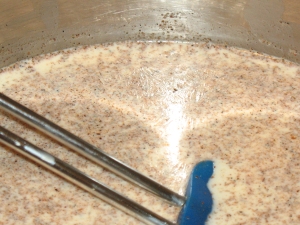
4. Pour cream through strainer into a medium-size bowl.

5. Stir pumpkin into hot cream, let stand 5 minutes.
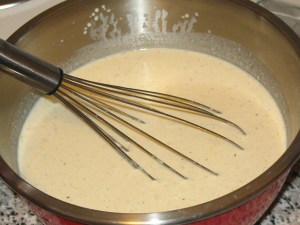
6. Meanwhile, in a medium bowl, mix sugar and salt.

7. Separate the yolks from the egg whites, gently whisk yolks into sugar mixture until just combined. (Save the whites for something else.)

Tip: try to crack the shell halfway between the top and the bottom of the shell. It’s easier to separate the yolks if you have two fairly equal sized shells to work with.
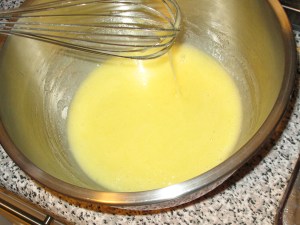
8. Use a ladle to temper the hot cream into the egg mixture; adding one third at a time, stirring it in. Don’t rush this, you don’t want scrambled eggs.

We are almost ready to divvy up the mixture into the ramequins.

9. Place a small strainer over a ramequin. Use ladle to reach the bottom of the bowl where all the vanilla bean pods have sunk, and ladle some mixture through the strainer. Do this for each one to ensure every portion gets a generous amount of vanilla pods.

After that, ladle out the mixture evenly, and strain each time.
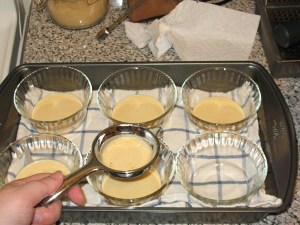
Double-straining is very important because you’ll notice that on each pour, the strainer will get clogged with skim on every pour and you don’t want that gunk in your custard.

10. Place both pans in the oven and create a bain marie using the hot water from the kettle.

11. Bake 35 minutes until the edges of the custard are set. Test for doneness by shaking, the centre should wobble like Jell-o. If the whole surface shakes give it 3-5 more minutes. If nothing shakes it’s overdone.

12. Remove from oven and use an egg-flipper type spatula to lift the ramequins out of the dish, and place on wire rack to cool for one hour.

13. Cover each cup with plastic wrap and refrigerate overnight.

14. Set ramequin on counter for 20 mintes to stand. Then remove plastic, and gently blot the surface with paper towel to remove condensation.

15. Sprinkle one teaspoon of turbinado sugar, cover the edges first and work towards the centre, then tilt and tap the ramequin to spread the sugar evenly.

16. Place ramequin on fire-proof surface and use your mad torching skillz.
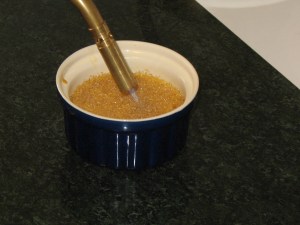
The key to doing this properly is don’t let the flame get too close, and always keep it in motion. It takes around 3 minutes to melt the sugar properly into a nice glassy surface.

17. Chill for 10 minutes, then devour.

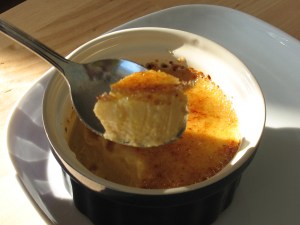
Verdict:

Patty: <setting up camera> “You can have first bite.”

Boyfriend: “Really?” <grabs spoon>

Patty: <taking photos and looking down> “Well?”

Boyfriend: “Oh my God!!”

Patty: “Is it good?”

Boyfriend: “No. It’s awful. You don’t want any.”

Patty: “Give me that spoon… ooohh, nice.”

Boyfriend: “This is amazing. I love the after taste, the nutmeg, it’s totally there. It kind of reminders me of egg nog, just a little. It’s so good.”

Playlist: David Bowie – Ziggy Stardust

What dessert are you celebrating Thanksgiving with?
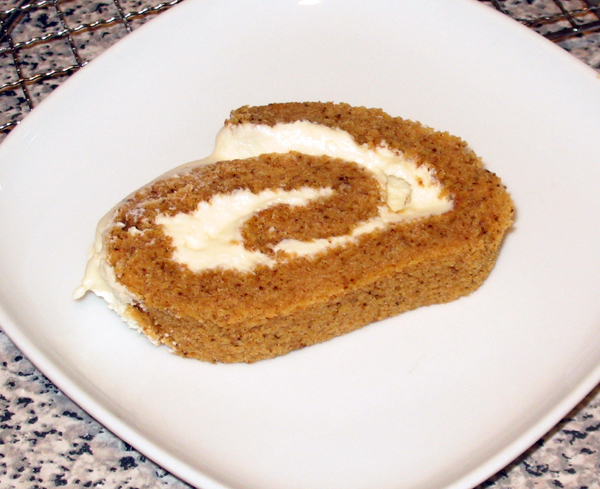
Sea salt penuche taffy

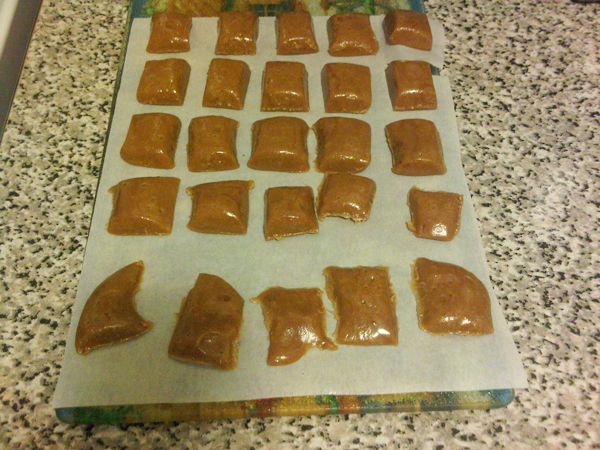
Apparently 3 is not the magic number, or this would be a picture of penuche fudge instead of penuche taffy.

Until this failed to set, I had high hopes that I had finally achieved penuche fudge, which as I mentioned yesterday, is a childhood dream of mine. Alas I did not achieve fudge, but I did achieve something, and it has the faint taste of penuche, like a dream gone past recall. I am so close!

I wonder if this is how my sister Chocoholic used to feel.  For years when she made fudge it never set, it just slowly slid to one end of the pan. We ate it anyway, and it was delicious, but there is something annoying and humbling about being unable to make fudge.

I followed the traditional penuche recipe from Old Tyme Fudge. I’m going to try it again today.

I read a lot of online candy recipes, and often find comments that say, “This recipe sucks, I followed it exactly and it didn’t work”.  That’s a pretty conceited way to look at it. If it doesn’t work, the problem must be the recipe? It can’t be your ingredients? Or your equipment? Or your lack of technique?
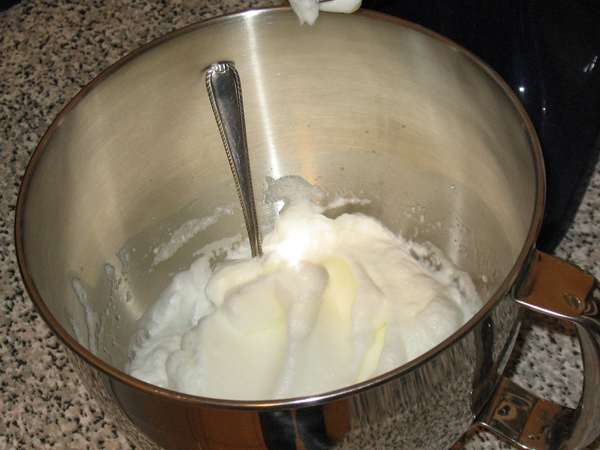
I used to do tech support, I’m okay with admitting the recipe is fine and the problem is the user. If you try 3 different recipes of the same thing and it doesn’t work, the only common denominator is you.

Notice how it’s still pretty glossy? I suspect that is the problem. It’s stretchy, and when you take a bite it retains a perfect imprint of your teeth, so I think the problem is that I didn’t beat it enough after it cooled. (I was conservative during beating because I didn’t want another rock-hard lump of penuche.)

And yet…

… it wasn’t a total loss. Look at that gorgeous colour!  It mostly held its shape. Boyfriend carefully sliced each piece for me. (Okay, I couldn’t slice this, I tried. After jumping up and down leaning on the knife and not getting anywhere, he rescued me.)

I tasted one, and it was good. I added a little sea salt and wow. Even though this isn’t the final result that I wanted, I liked this a lot, but I’m not sure I could make this again even if I tried.

I’ve read that beating fudge by hand takes around 10 minutes and I had no interest in making my arms sore, so I used my KitchenAid and beat it for 1 minute (20 seconds on Low, 40 seconds on Med-High.) It was so thick I stopped. If you are interested in recreating this penuche pseudo-taffy, instead of making actual fudge, follow the recipe above and under-beat. I have no idea if you’ll get the same results so good luck!

Patty’s chocolates round 1 – peppermint

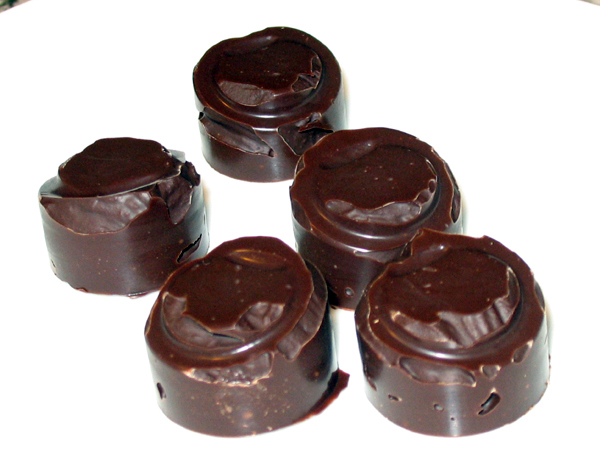
I have made chocolates before, but I have never used a chocolate mould before. I was curious if having a properly shaped and sized chocolate would really make a difference. Taste is the most important factor, and I know that my chocolates taste good. So how important are aesthetics? Let’s find out.

Once again I am using Callebaut chocolate which I adore.

(Belgian chocolate + peppermint) x joy² ÷ 15 = bliss

Good to know before you start:

Make sure that all your kitchen implements are clean and dry to prevent seizing.

Time required: 3.5 hr (30 min prep plus chilling)

Yields: 15 pieces

Cost per portion: $1.00

Total cost if you have none of the ingredients: $15.00

Special kitchen implements I used:

  • fine sieve
  • Fat Daddio’s silicone chocolate mould, sloped cylinder shape
  • Wilton silicone spatula, with flat end

Ingredients:

  • 4 oz semi-sweet Belgian chocolate
  • 1 oz semi-sweet mint chocolate Chipits
  • ⅛ C heavy cream
  • 3-4 drops peppermint oil

Instructions:

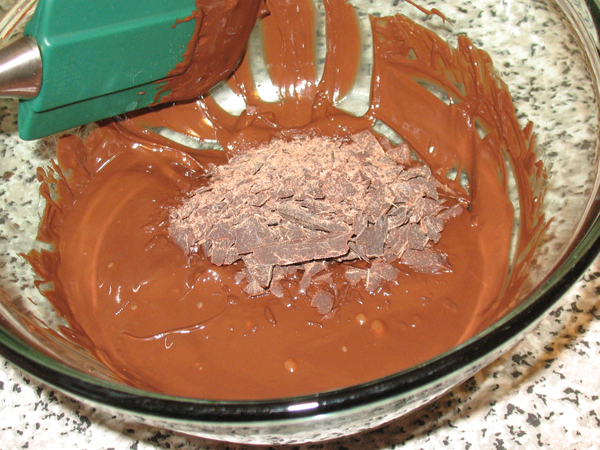
1. Melt chocolate in the microwave, reserving about one third. Microwave on High for 3 minutes, stirring every 30 seconds.

2. Add reserved chocolate to melted chocolate, and stir in 1 drop peppermint oil. Stir until smooth.

3. In a heavy-bottom sauce pan add cream and 2 drops of peppermint oil, heat to scalding.

4. Using a sieve, add cream to chocolate and stir until smooth.

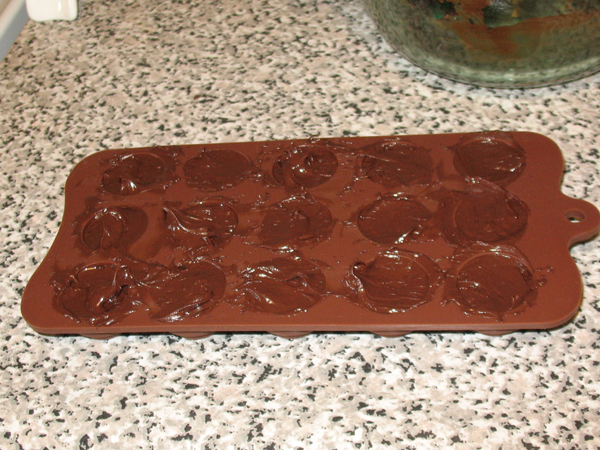
5. Spoon into mould. My chocolate was very thick so “smoosh into mould” might be more accurate.

6. Run a flat-end scraper over the top of the mould. I used my silicone spatula for this, in 3 passes. This action collects the excess chocolate on the end of the scraper, which you can then stuff into any cup that isn’t filled enough.

7. Place mould into covered container, and chill. The product description says chill 20 min but I let them chill for 3 hours before sampling, and the were perfect, and I left the rest in the fridge overnight anyway.

8. To remove from mould, cover your hand with a plastic baggy and use thumb to pop out the chocolates. The plastic prevents the oils on your skin from blemishing the chocolates. Work quickly and touch the pieces as little as possible to avoid melting and smudges.

Verdict: These turned out great, I’m quite pleased. They are smooth, creamy, and make my taste buds sing. Oh, I love peppermint!

Using a chocolate mould was easy. If you want to make a large amount of chocolates, use 4 moulds at a time and quadruple the amounts of chocolate. This mould cost $8.25 and was totally worth it.

I knew my chocolate would have air bubbles because it was so thick, there was no way to ensure it flowed into the moulds evenly. If you are looking for a perfectly smooth finished product, skip the cream.

I don’t regret any of the chocolates I made in muffin tin cups, but from now on I will always use a mould.

Making these has changed me profoundly. I’m completely serious. It feels like I have reached a whole new level in baking. I feel like a rock star. It reminds me of the day I made the dessert that changed my life, but more on that in December.

Have you ever baked something that made you feel differently about your mad skills?

Playlist: Castlevania soundtrack